Immigration-Only Attorneys Serving Salem, Oregon, & the Pacific Northwest Since 2009
For many immigrants, U.S. citizenship represents the culmination of years of work, sacrifice, and commitment to building a life in America. The rights and opportunities it unlocks are significant, but so are the steps required to get there. The naturalization process is governed by strict eligibility rules, and a single error or omission on the N-400 application can cause delays or trigger a denial. Travel history, residence requirements, English and civics requirements, and past disclosures all deserve careful review before filing.
At Affordable Immigration, we’ve guided clients through the stages of the naturalization process since our founding in 2009. Immigration law is all we do. We don’t take other types of cases. Our team brings more than 50 years of combined practice experience to the matters we handle. We’re admitted to practice in federal immigration courts and represent clients in matters before USCIS and the U.S. Department of State. We’ve helped thousands of clients across Oregon and Washington, including the Salem and Woodburn areas, pursue citizenship.
We offer free initial consultations, virtual consultations, and service in Spanish.
Permanent residency: You must have held lawful permanent resident (green card) status for at least five years, or three years if you are married to and living with a U.S. citizen and meet the applicable requirements.
Continuous residence: You must have lived continuously in the U.S. during the applicable five-year or three-year qualifying period. Absences of more than six months can disrupt continuous residence and affect eligibility.
Physical presence: You must have been physically present in the U.S. for at least 30 months out of the last five years, or 18 months out of the last three years if you qualify under the marriage-based three-year rule.
Good moral character: USCIS evaluates compliance with U.S. laws and ethical conduct over the qualifying residency period.
State residency: You must have resided in the state or USCIS district where you’re applying for at least three months.
English ability: You must demonstrate the ability to read, write, and speak basic English unless an applicable exception or accommodation applies.
Civics knowledge: You must pass a civics test covering U.S. history and government unless an applicable exception applies.
Some applicants may qualify for English-language exemptions, civics accommodations, or military-related exceptions. Eligibility depends on the applicant’s circumstances and current USCIS rules.
What Happens If a Naturalization Application Is Denied?
A denial doesn’t necessarily mean the end of the road.
Common reasons for denial include:
Insufficient English proficiency: Failing the English portion of the USCIS interview can result in denial, though applicants may be eligible to retest.
Failure of the civics test: Applicants who don’t pass may be scheduled for a second attempt before a final decision is issued.
Lack of continuous residence: Extended absences from the U.S. during the qualifying period can disrupt continuous residence and lead to denial.
Criminal history or moral character findings: Criminal history or other conduct may affect USCIS’s good moral character determination and result in an unfavorable decision.
Incomplete or inconsistent application answers: Missing information or conflicting N-400 disclosures can lead USCIS to request more evidence or question eligibility.
Tax or prior immigration issues: Tax concerns or prior immigration violations can require careful review before a response or refiling.
After a denial, applicants generally have several options:
Form N-336 hearing request: Applicants may request a hearing on the denial using Form N-336. USCIS generally requires the request to be filed within 30 calendar days of the denial decision date and with the required fee.
Motion to reopen: If new evidence is available that wasn’t part of the original record, a motion to reopen may be filed with USCIS where available.
Motion to reconsider: If the law was misapplied to your case, a motion to reconsider asks USCIS to review the legal basis of its decision where available.
Refiling: In some cases, applicants can address the underlying issue and refile the application.
Having our naturalization attorneys present at the USCIS interview can help you respond to questions accurately and work through concerns before they become grounds for denial. If you’ve already received a denial, our team can review your case and identify potential next steps based on your circumstances.
Over 50 Years of Combined Immigration Experience at Your Service at (971) 308-5892
“I was a stranger, and you took me in… then the righteous answered him, saying Lord… when saw we thee a stranger and took thee in?
Verily I say unto you, inasmuch as you have done it to the least of these my brethren, ye have done it unto me.”
- Matthew 25:36-40
“Thanks to Steve Miller and his team, my case was successful. I don’t know what I would have done without them. Veronica especially is very attentive and they are all so friendly, fun, and passionate about their job.”
Edelmira S.
“Fantastic Team”
“We were immediately impressed by their professionalism, attention to detail, and prices. Yanira guided us through the process with ease. She truly made this less daunting, with her great sense of humor and experience.”
Cian R.
“They Give You Confidence”
“From the first day I asked for information, the treatment was very kind and they resolved all my doubts. They are all a great team and having them makes you feel confident that everything will work out.”
Samaria M.
“We Are So Happy”
“They are very good at what they do. I knew right then that this was an attorney I could count on. I appreciate all they did for us and I'm happy to say that we are now living happily together here in Oregon.”
Former Client
“Always On Top of Everything”
“My husband and I had such a great experience with Affordable Immigration. Veronica made it easy for us throughout the whole process. She answered all of our questions we had. Highly recommend this great team!”
Alejandra S.
“Truly A Great Team”
“I am so thankful to God for guiding me to Affordable Immigration! Truly a great team! Thanks for all your hard work and honesty. I’m enjoying having my mom here!”
Leidy S.
“A Team On My Side”
“I want to thank the Affordable Immigration team for all the help they offered in our process. They helped me all the way ready with answers to avoid small mistakes that could cause bigger problems.”
Juan L.
“Excellent Communication”
“I had a great experience working with them on my case. Excellent communication, always on top of everything, and for any doubts, they have an answer. Overall I have nothing but great things to say about them!”
The naturalization process involves several steps, each requiring careful attention to detail and adherence to USCIS requirements:
Determine eligibility: Confirm that you meet all necessary criteria, including residency duration, age, language ability, and good moral character.
Complete Form N-400: This is the primary application for naturalization. Accurate, complete information is essential, and errors or omissions can cause delays.
Attend the biometrics appointment: After submitting your application, you’ll receive a notice scheduling a biometrics appointment, where fingerprints, a photograph, and a signature are collected for a background check.
Prepare forthe naturalization interview and test: The USCIS interview includes a civics and English test unless you qualify for an exemption. If you filed your N-400 form on or after October 20, 2025, you will receive the 2025 naturalization civics test that consists of up to 20 questions from the 128 civics test questions. You must answer 12 questions correctly to pass.
Receive a decision: USCIS will notify you whether your application is granted, continued, or denied. If approved, you move to the final step.
Processing timelines vary based on case circumstances, USCIS workload, and agency processing conditions. Working with a naturalization lawyer in Salem can help you handle each step carefully and address questions that arise during the process.
Establishing U.S. Citizenship for Children Born Abroad
The CRBA and Form N-600 document citizenship through a parent, but they apply in different circumstances. Acquisition or derivation of citizenship through a parent is legally distinct from naturalization through Form N-400.
Consular Report of Birth Abroad (CRBA)
A Consular Report of Birth Abroad (CRBA) is a document issued by the U.S. Department of State that serves as proof of U.S. citizenship for a qualifying child born outside the United States to a U.S. citizen parent.
Eligibility: At least one parent must be a U.S. citizen at the time of the child’s birth and must meet specific residency or physical presence requirements.
Application process: Parents apply for a CRBA at a U.S. embassy or consulate in the country where the child was born, submitting proof of the parent’s citizenship, the child’s birth, and the parental relationship.
Purpose: The CRBA can establish the child’s U.S. citizenship and can be used to obtain a U.S. passport and other official documents.
Form N-600: Application for Certificate of Citizenship
Eligibility: The N-600 is for individuals who automatically acquired or derived citizenship through a parent, either at birth or before age 18, including children born abroad to U.S. citizen parents or children who became citizens when a parent naturalized.
Application process: Applicants file the N-600 with USCIS and must provide evidence of their citizenship claim, including the parent’s citizenship status, the applicant’s birth certificate, and proof of the parent-child relationship.
Purpose: An approved N-600 results in a Certificate of Citizenship that serves as official proof of U.S. citizenship for legal and administrative purposes.
Naturalization unlocks rights and opportunities that aren’t available to permanent residents. Here’s what citizenship makes possible:
Voting rights: U.S. citizens can vote in local, state, and federal elections, giving them a direct voice in the democratic process.
Federal employment eligibility: Many federal government positions are reserved for U.S. citizens, opening access to careers that require citizenship status.
U.S. passport: A U.S. passport enables international travel and access to consular support at U.S. embassies and consulates abroad, including visa-free or visa-on-arrival entry to many countries.
Protection from deportation: U.S. citizenship generally protects against removal, allowing you to live and work in the United States without the limitations that apply to permanent residents.
Sponsoring family members: Citizens can sponsor family members, including spouses and children, for permanent residency. Immediate relative visas for citizens aren’t subject to annual quotas, while family-preference categories remain subject to separate rules.
Federal benefits: Citizens may qualify for Medicare, Social Security, and federal financial aid for education, although eligibility depends on the requirements of each program.
Scholarships and grants: Many scholarships and educational funding opportunities are available only to U.S. citizens, though each program has its own eligibility criteria.
Citizenship also allows fuller participation in public life, including holding public office and serving on a jury.
Your Naturalization Attorney in Salem
At Affordable Immigration, we can walk you through each step of the naturalization process, help you gather the required documentation, prepare you for the USCIS interview and civics test, and address any issues that arise along the way.
Immigration-Only Focus & Experience
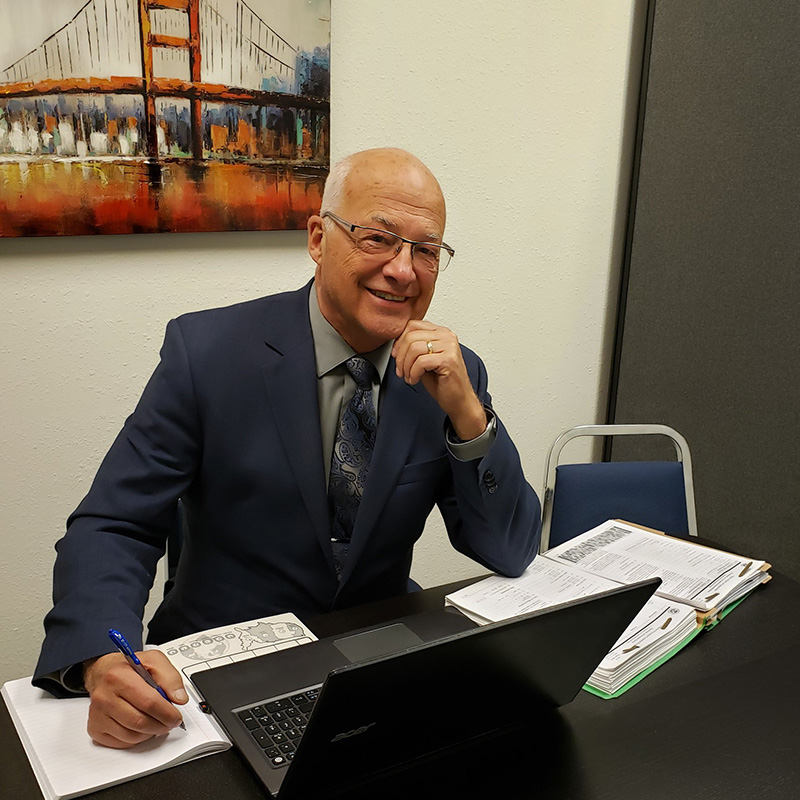
Founded in 2009 by Attorney Steve Richard Miller, our firm focuses solely on immigration law. We don’t handle other types of cases. That single-practice focus means our team is oriented toward immigration matters rather than divided across unrelated work. Our team has more than 50 years of combined practice experience, has handled thousands of cases, and is admitted to practice in federal immigration courts. We were also voted Best Immigration Law Firm in 2022 by BestoftheWillametteValley.com, and Attorney Miller serves on the Marion County Human Trafficking Task Force.
Accessible Representation & Client Services
We keep our rates competitive because we believe quality legal representation should be accessible to everyone, not just those with substantial resources. As a faith-based law firm, we welcome clients seeking immigration assistance. We offer free initial consultations, virtual consultations, and service in Spanish.